



Blog
Dry training in 2022

Do you train a lot, but are your muscles still not very visible? If you’d like to show off your toned body, that’s definitely a problem. Do you know what ‘cutting’ involves? Read on to find out!
What is the purpose of dry training?

Dry training is all about lowering your fat percentage without losing any muscle mass. Two aspects are important here: nutrition and training. If you have strong motivation and a precise approach, then dry training might be for you. Does this sound easy to you so far? Make no mistake. The process of dry training is not for everyone, but the end result is definitely worth it!
The power supply
Dry training is not just about training, but also mainly about what is known as 'eating dry'. Your muscles can only grow through heavy training if you have enough building materials.
To minimise muscle breakdown, a calorie deficit of 10-20% below your energy needs is a good guideline. Exactly how many calories you need varies per person and per activity level. So to create a deficit, you need to calculate your calorie needs in advance. There is a formula for this: your weight x 20-30 kcal. Note that too much eating calories leads to extra fat being stored because your muscles cannot use all these calories. Too few calories in turn leads to too little energy, putting you at risk of losing muscle mass. So make sure you keep a close eye on your energy intake. It is recommended that you eat foods rich in fibre.
In addition, it is important to have a balanced diet, as this is the only way to build dry muscle mass. It is also important to healthy eating. You will need to find both the right number of calories and the right balance of macronutrients for yourself. Macronutrients are the nutrients – found in large quantities – that provide calories/energy. These nutrients are proteins, carbohydrates and fats.
- Proteins are one of the macronutrients. Read more about proteins under the heading ‘Protein shakes and cutting’.’
- Carbohydrates are the main energy suppliers for your body. It is recommended to eat slow carbohydrates in wholegrains, vegetables and legumes, and avoid fast sugars.
- Alongside carbohydrates, fats are a second source of energy. However, do pay close attention to the amount of fat you consume: at 9 calories per gram, this can quickly exceed your calorie requirements. A common guideline for fat intake is 1 gram per kilogram of body weight. Sources of fat include linseeds, avocados, walnuts, olive oil and oily fish.
The training
Besides nutrition, training is of course extremely important. No training = no (stronger) muscles to show off!
Generally speaking, you build muscle mass by training hard. This also applies to cutting; carry on training as hard as possible (using good technique, of course). It’s very important to keep your training load high, especially when you’re in a calorie deficit. This way, your body sees it as a sign that you still really need that muscle tissue, and your muscle mass may be preserved. Remember: your muscles need a similarly intense training stimulus to that in the period before cutting.
Despite keeping your training load high and training heavy, this does not mean you suddenly have to train much more than you did before. Nor does it mean you suddenly have to change your entire fitness schedule, just focus on a particular exercise or do a lot more reps. Keep training as you have always done, but now focusing on the points covered in this blog.
Some other tips for dry training:
- Don't take too much rest between exercises, because this way you combine cardio training with strength training. This way, your heart rate goes up and your body burns more;
- Cardio training in itself does not cause fat loss, but the calorie deficit you create through the extra cardio does. So for dry training, cardio training is optional;
- Opt for High Intensity Interval Training. This is a good way to burn a relatively large number of calories in a short time;
- Do compound exercises. With these, you train a very large part of your body. You use relatively the most energy with these;
- Take enough recovery time. Your muscles need around 48-72 hours after each workout to recover and recharge for the next workout;
- Set achievable goals. You cannot achieve the end result of good dry training right away in one day. Make a long-term plan and work towards it step by step.

Protein shakes and dry training
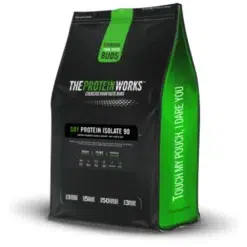
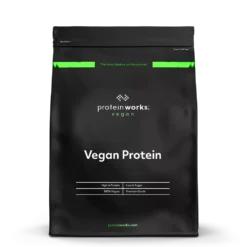
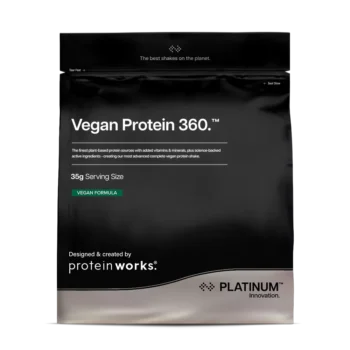
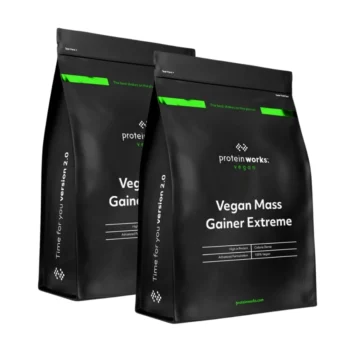
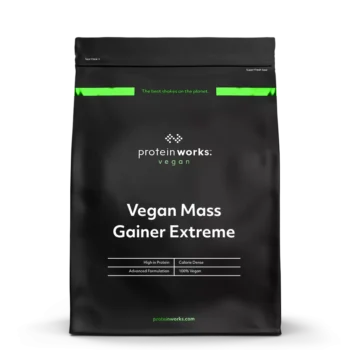
Protein is one of the macronutrients in your diet. Make sure you’re getting enough protein (you can find more information about protein here read). For dry training, the type of protein does not necessarily matter, but of course we recommend vegan protein 😉 . Through protein shakes/supplements, you can very easily increase your protein levels.
Calculate your protein intake when you want to dry train. A good guideline is 1.8-2 grams of protein per kg body weight. 1 gram of protein also provides 4 calories.
Measuring results
After training for days, weeks and months, you naturally want to know how much progress you have made. So measure your weight and fat percentage. It is important to always measure at the same time, so you can compare the same figures.
- Are you losing weight? That is often a sign that you have lost fat mass. Is your fat percentage also going down? Then you're in the right place.
- Will your weight stay the same? Don't panic. It may be confirmed that you are eating the right way and that your muscle mass is increasing. You won't know this for sure until you measure your fat percentage and it also shows a downward trend.
We wish everyone who has decided to take part in dry training the best of luck. Take a look at our range here protein/proteins.